


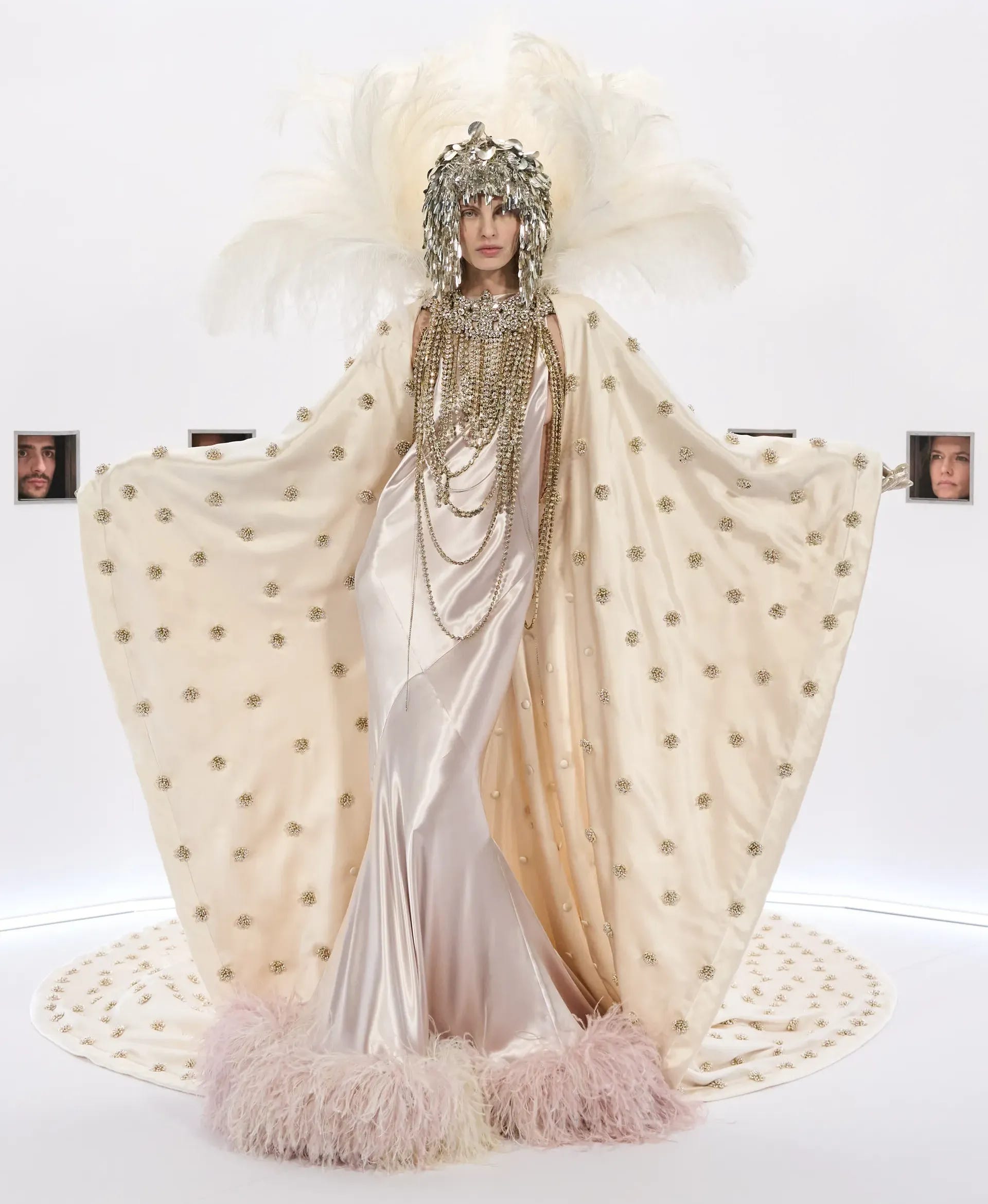
There is a sacred magic in the clandestine — a curious longing for elusive, capsuled treasure. Alessandro Michele’s Valentino SS2026 Couture presentation offered a controlled visit into a dazzling dreamscape dripping with jewels and glowing memory.
Serving as a homage to Valentino Garavani’s lifelong cinematic adoration — a tribute that unfolded just days after his passing — the stimulating display took on the format of a 19th century Kaiserpanorama.
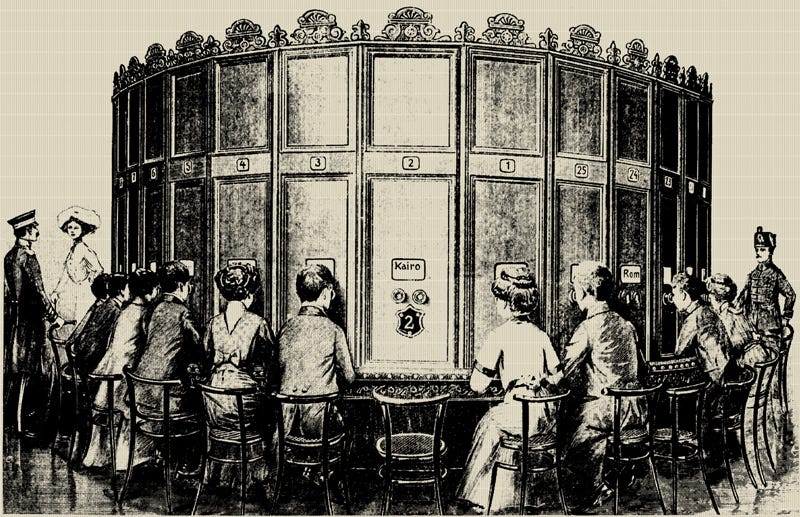
Launched in the 1880s by August Fuhrmann — years before cinema’s debut — the Kaiserpanorama was a circular cabinet that presented stereoscopic images through 25 peepholes. Colourised imagery of faraway destinations and events captivated viewers and facilitated escapism before the Kaiserpanorama was tragically forgotten, falling beneath cinema’s immense shadow. A lost reverie.
Michele’s worship of this discarded art form highlighted the quiet tragedy and consequence of artistic abandonment.
As curious viewers claimed their seats around the designated viewing pods, external distraction faded. A gilded resurrection lingered and the journey to a glittering realm commenced — each pod witnessing a varying sequence of looks.
Referencing Hollywood’s spirited golden age, theatricality surfaced through velvet, feathers, and embellishment. A mélange of grandiose characters now bathed in the stark spotlight, as the voyeurs caught fleeting glimpses of the ephemeral world.
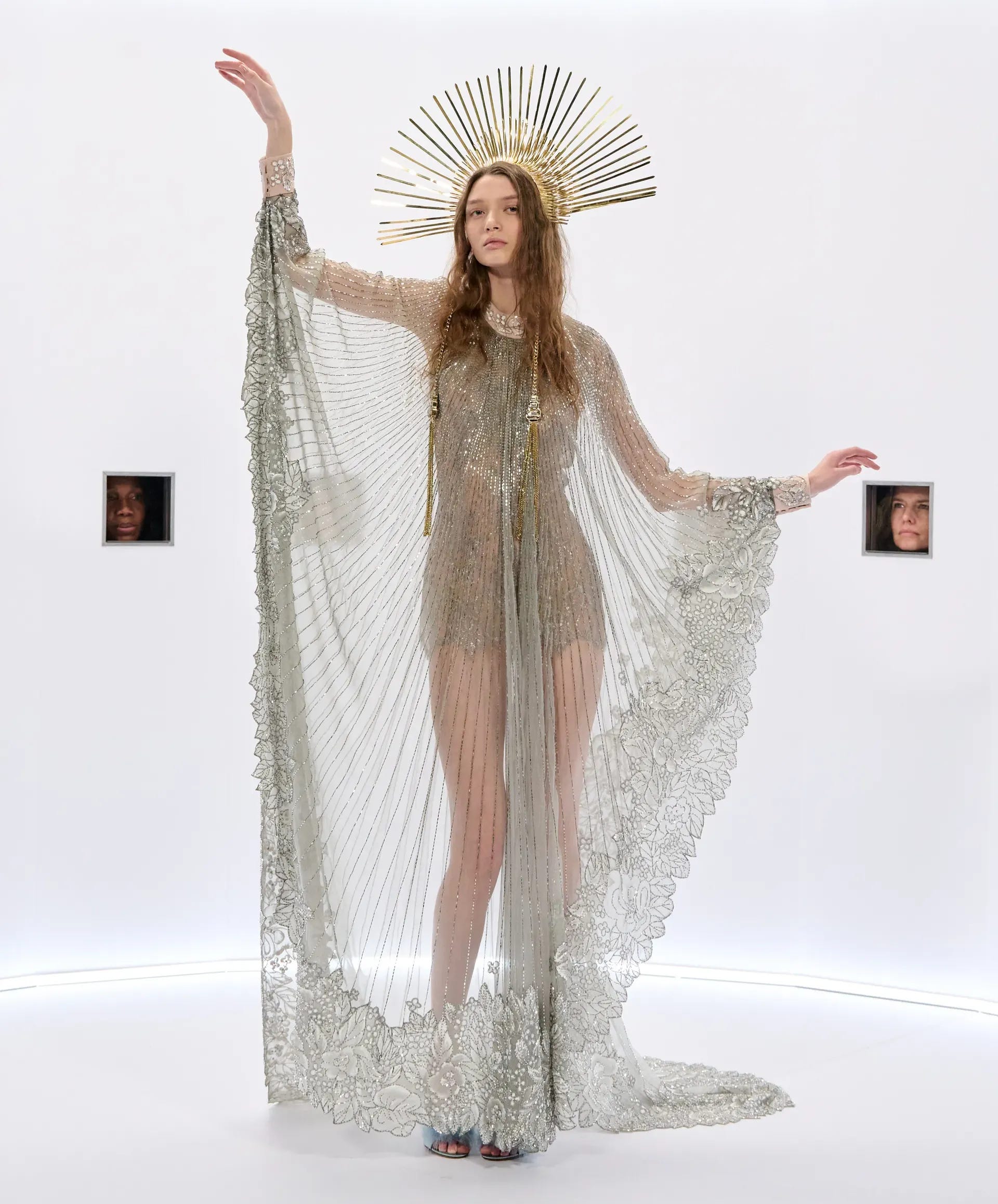
Goddess-worthy ensembles emerged featuring celestial headpieces and angel silhouettes, as a parallel to the silver screen cemented itself.
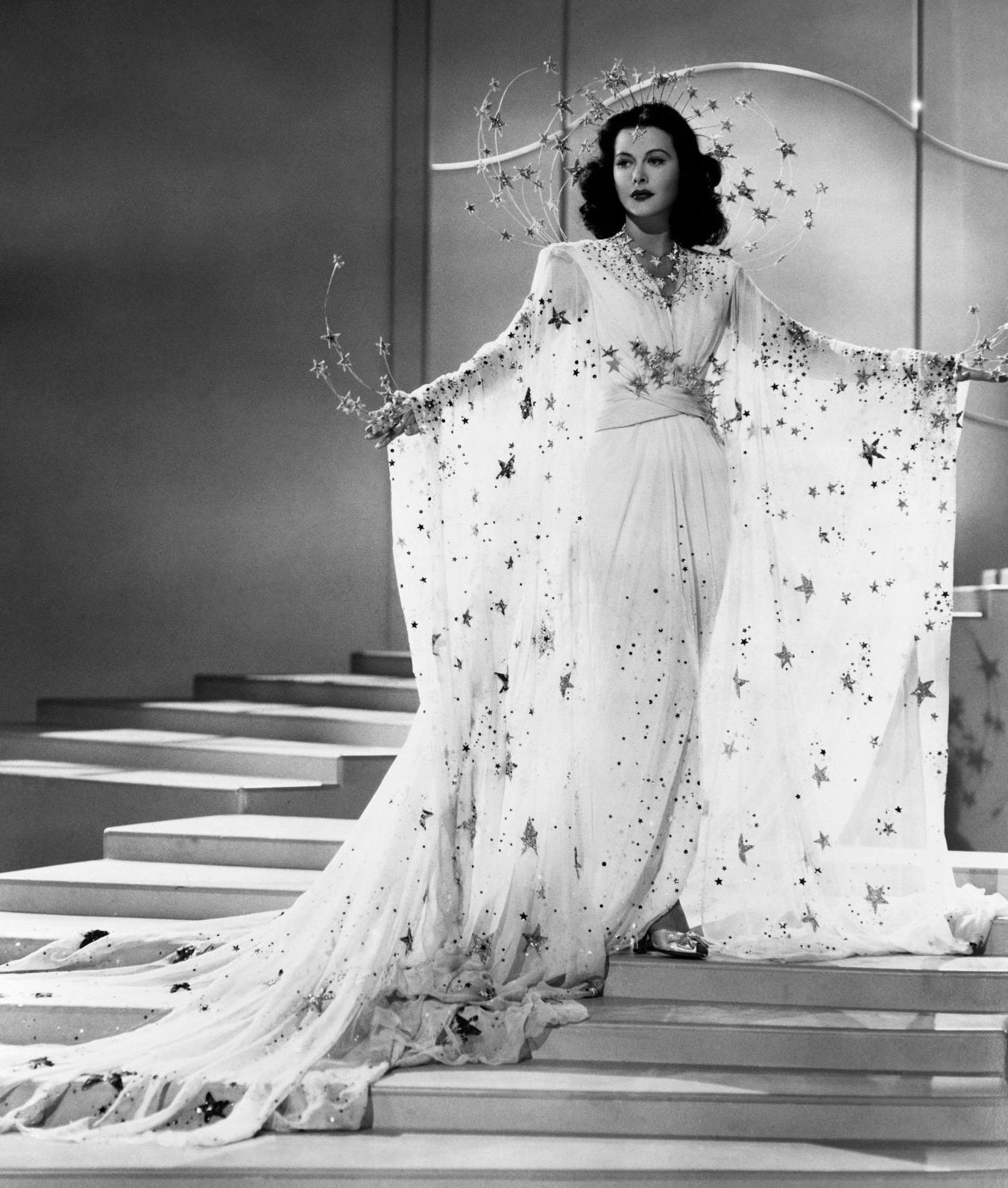
Hedy Lamarr’s starry angel gown from the 1941 film ‘Ziegfeld Girl’ is one possible reference — the plot revolved around the dazzling Broadway performances known as ‘The Ziegfeld Follies’.
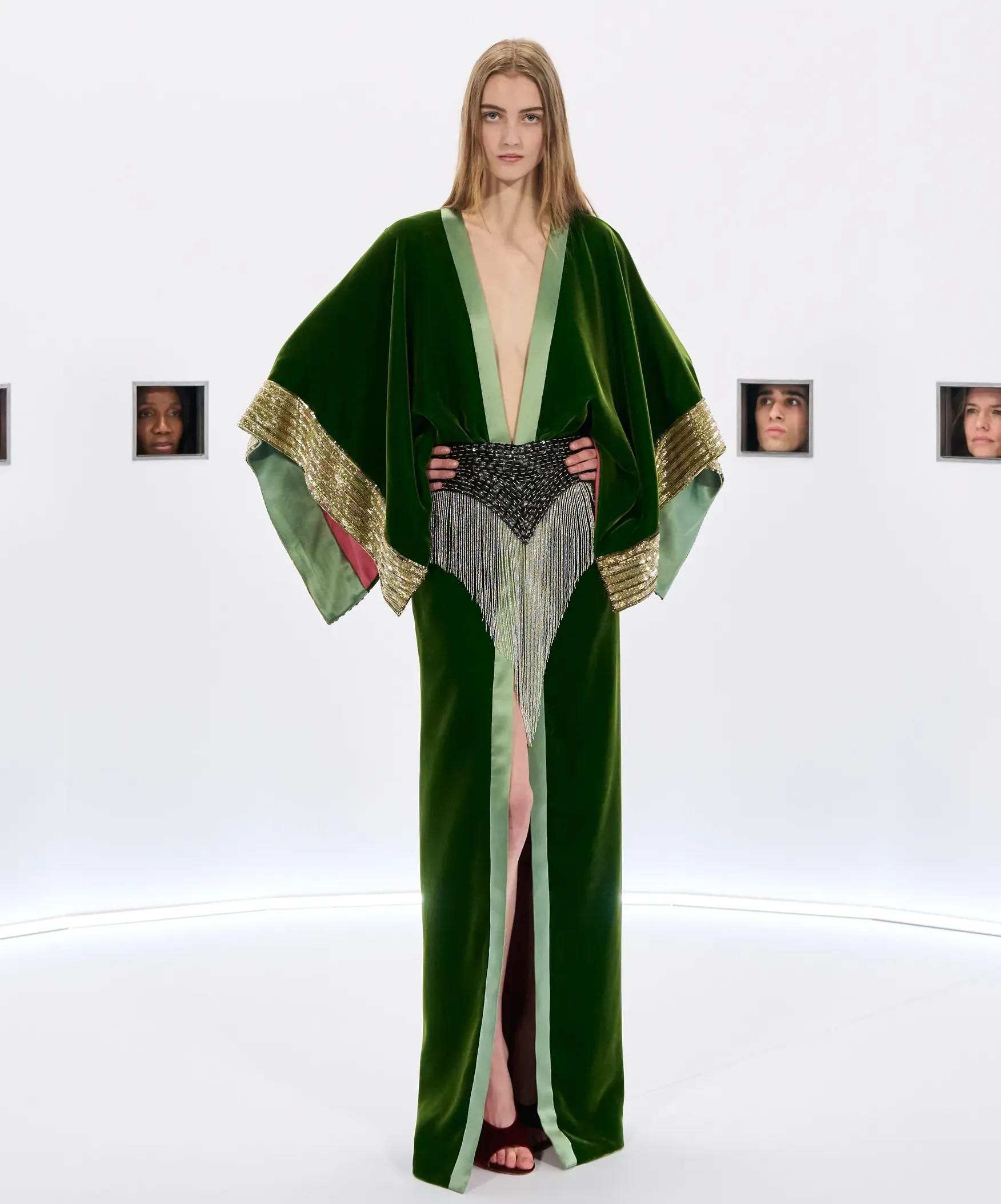
Art Deco visuals were detected through metallic fringing, Eau de Nil greens, skullcaps, and kimono silhouettes. ‘Eau de Nil’ translates from French to ‘water of the Nile’ and was a shade that surfaced following the Western waves of Egyptomania in the late 1800s, before hitting its decorative peak in the 1920s. The Art Deco aesthetic was heavily shaped by Ancient Egyptian visuals, triggered by the golden discovery of Tutankhamun's tomb in 1922.
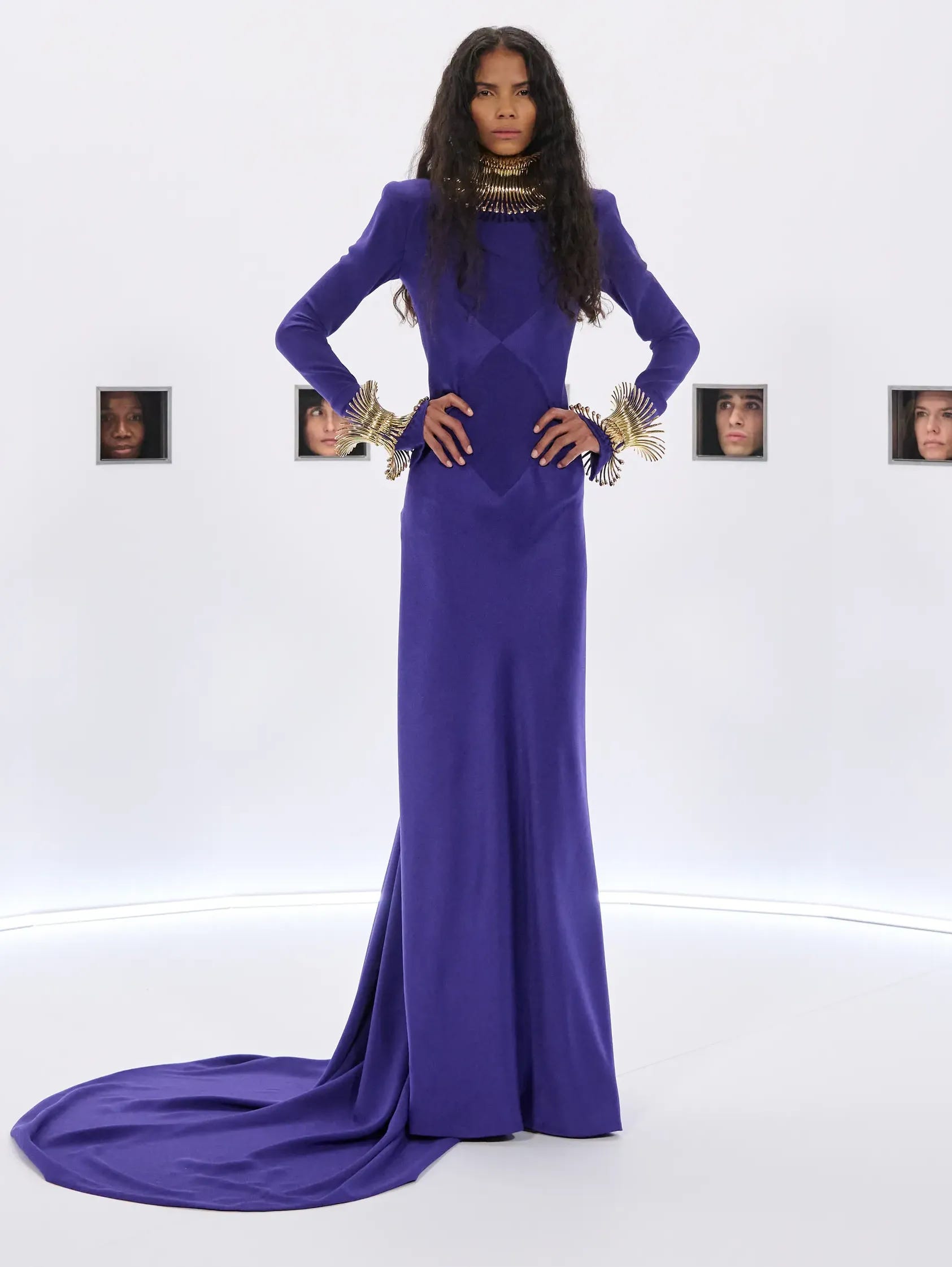
A lapis lazuli semi-sheer gown adorned with gold cuffs and a collar swirled beneath the light — hinting at Ancient Egypt’s enduring Western cinematic infiltration.
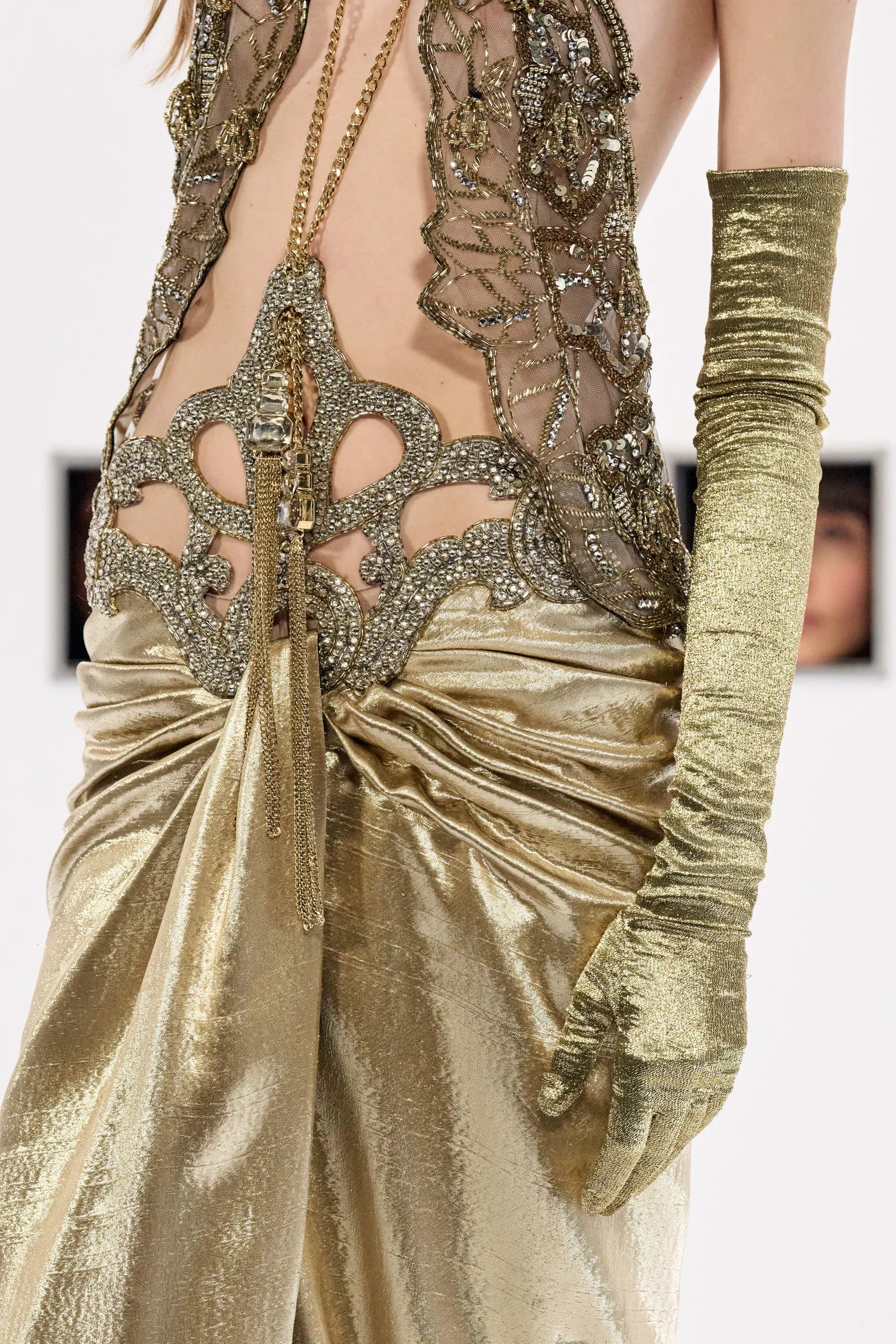
Lamé, shoulder padding, metallic pleating, and plunging necklines paid tribute to Valentino’s potent 1980s spirit, as 1950s and Elizabethan elements gently loomed.
An unexpected nod to modern cinema manifested in the form of rhinestone 3D cinema-inspired sunglasses.
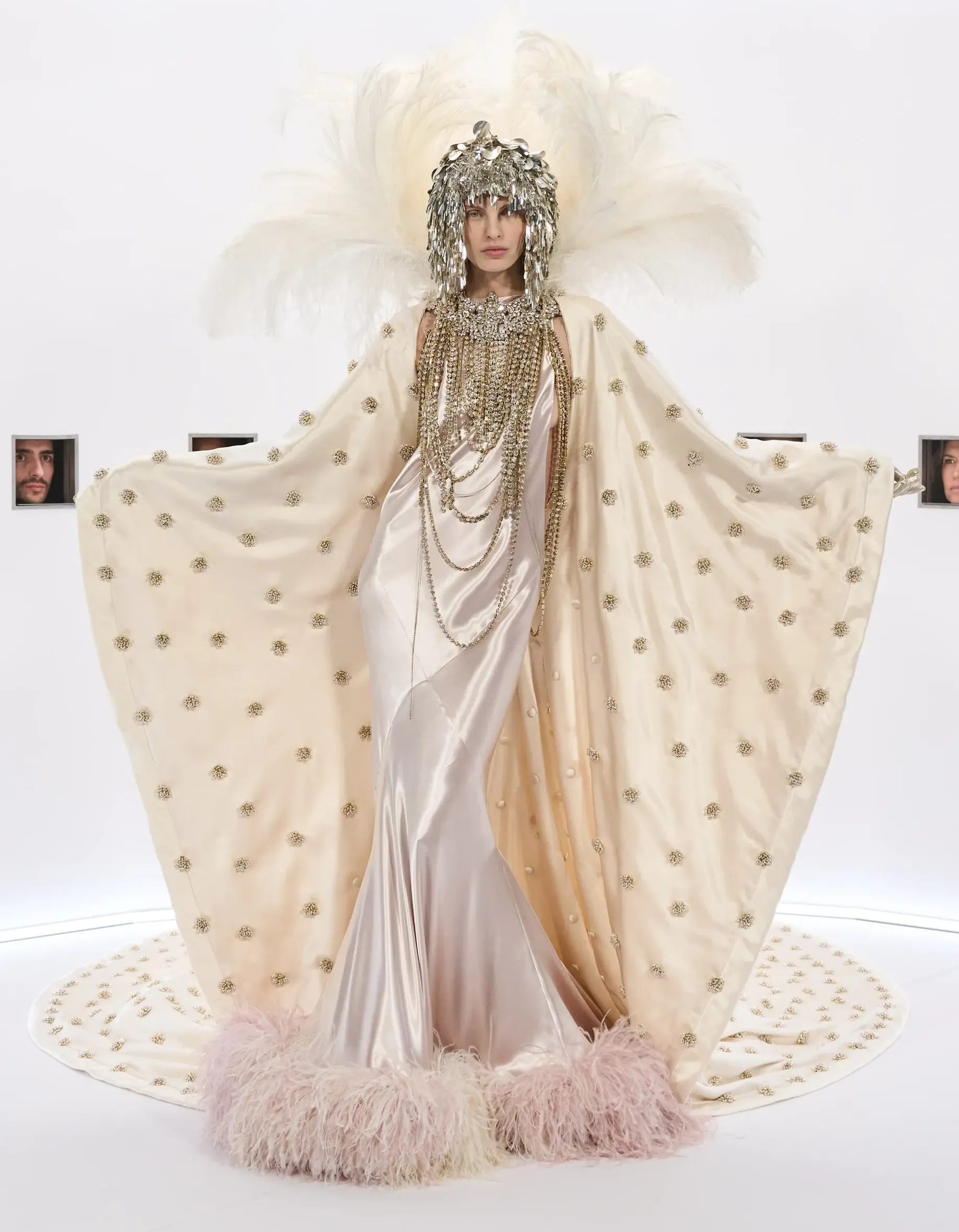
Showgirl extravagance was introduced through feather headdresses, fans, and jewel-encrusted leotards, as sumptuous robes and lingerie were plucked from the most glamorous of boudoirs.
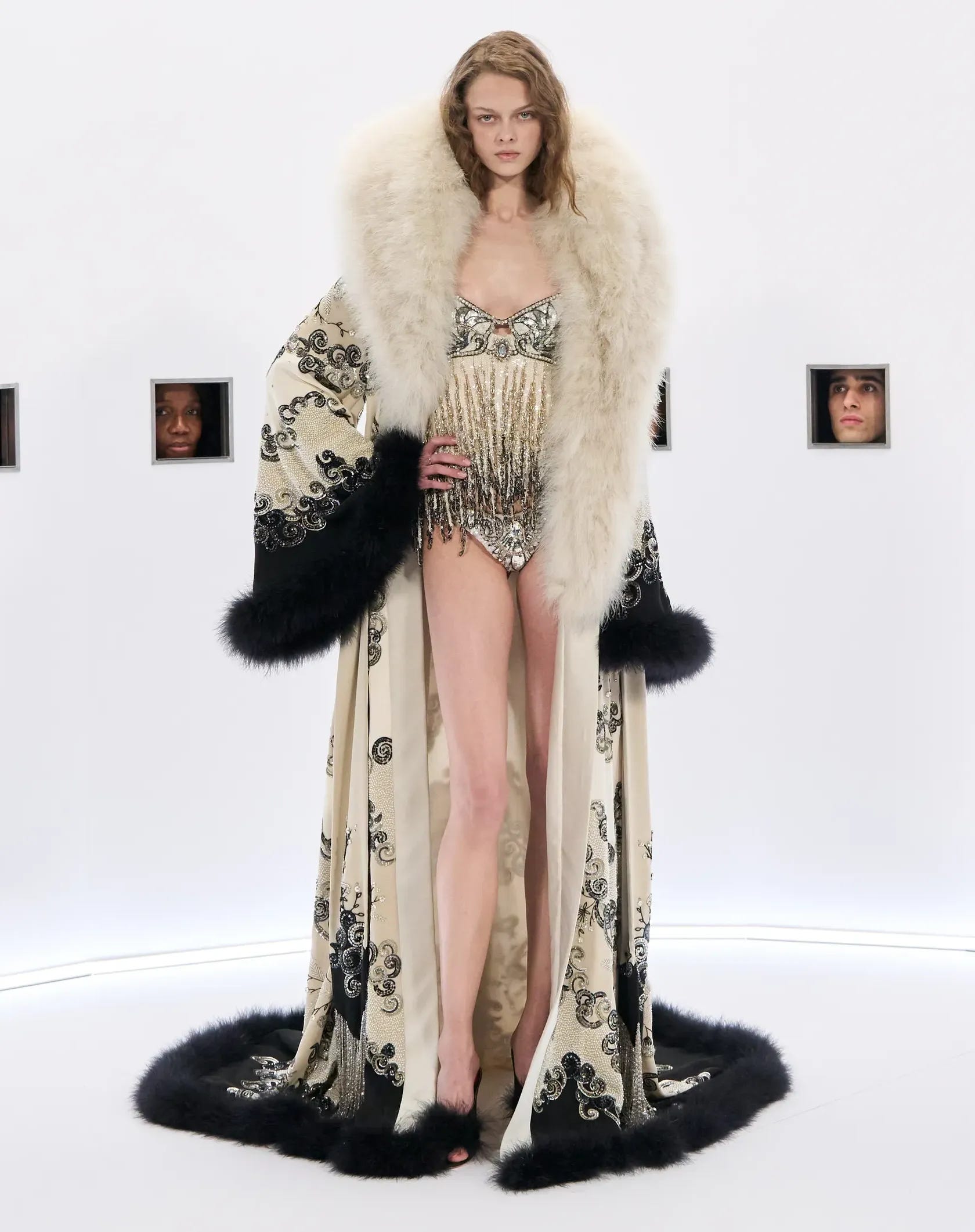
Bygone sartorial practices were resurrected through the presence of fur-trimmed embellished opera coats, and long gloves — a poignant commentary on the contemporary depletion of ornamental dressing.
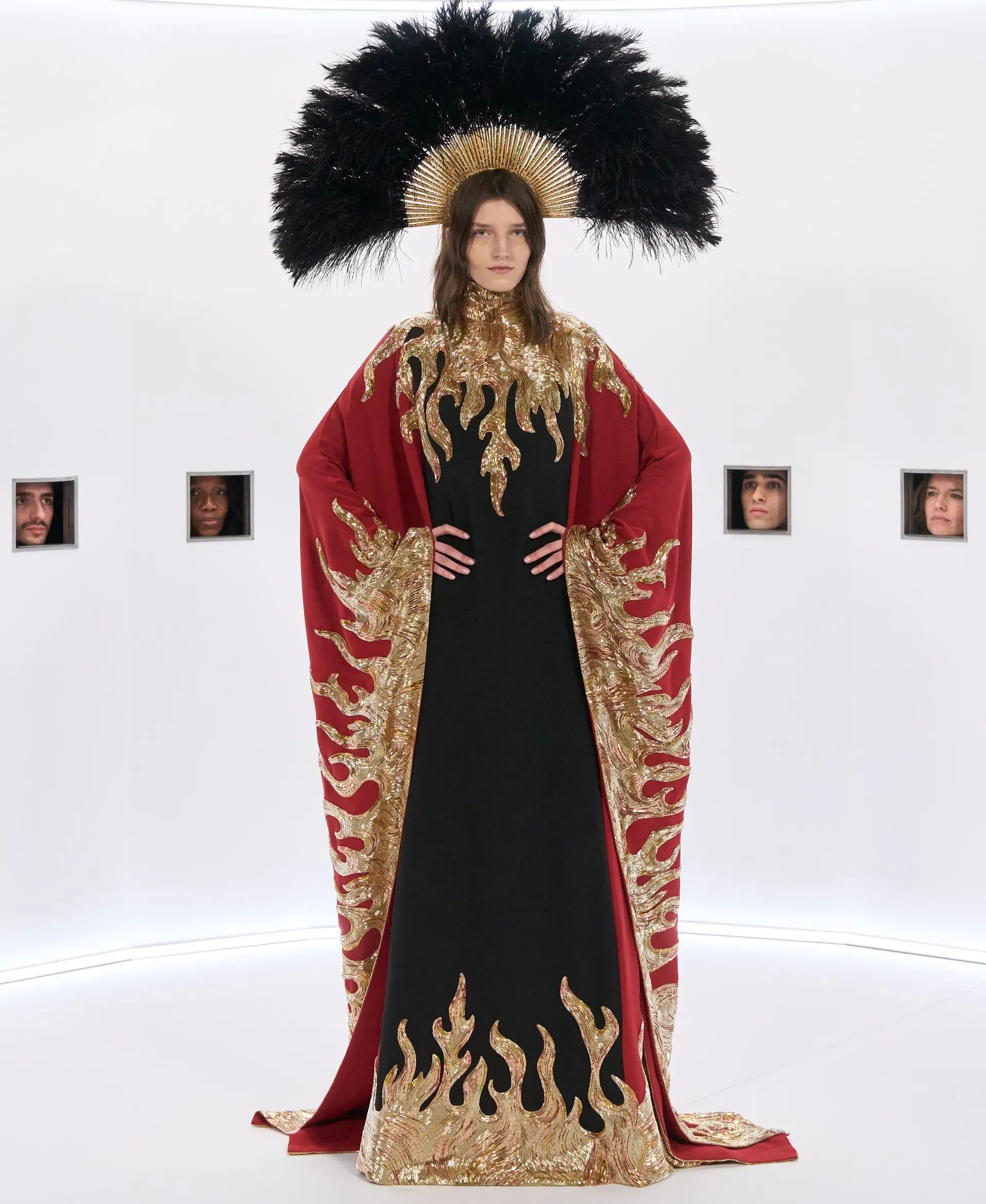
Valentino Garavani’s theatrical fire soon ignited a roaring reverie, as a flame-covered gown burst into view. Reminiscent of Elsa Schiaparelli’s 1930s surrealism, the hypnotic ensemble featured an intricately embellished flame design, ‘Valentino Red’ cape, and striking feather fan headpiece. Michele had previously described Valentino’s legacy as a ‘flame’ that must be nurtured, rendering this blazing creation a profound vow — and now an emotionally charged eulogy.
“I’m going to be one of the people that try to manage the flame. But I’m going to be just one. The flame is the thing that you must keep alive.”
- Alessandro Michele on Maison Valentino’s preservation, 2025.
Alessandro Michele’s glowing voyage extracted and stitched the most luminous visual eras into one opulent, maximalist tapestry, triggering a melancholic reflection on lost sartorial awe. Incorporating the historic Kaiserpanorama format felt bizarrely futuristic, signalling the contemporary abundance of access and thus the absence of sacred escapism.